Aquamarine Bracelets
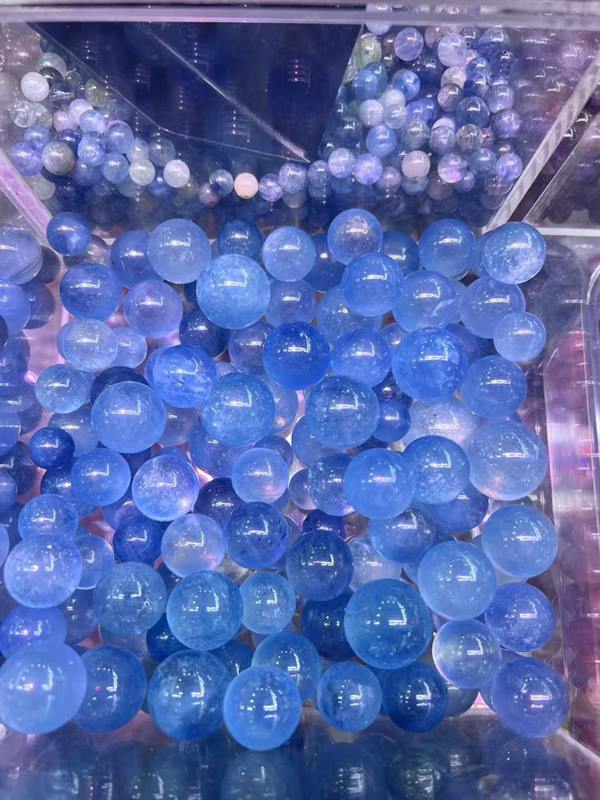
Pale blue beryl — the easiest colour to sell and the hardest to photograph honestly.
Aquamarine is blue beryl — the same mineral family as emerald, which is why the colour reads as cool and glassy rather than sugary. Pale blues sell across the widest age range of any stone we supply, and they stack against silver or gold without a colour clash.
The grade question on aquamarine is almost always colour: how saturated the blue is and how evenly it runs along the strand. Clarity comes second, because a slightly included strand with good colour outsells a clean pale one at retail.
- Bead sizes
- 8 / 10 / 12 mm
- Grades
- A, AA
- Look
- Pale to mid blue
- Quoting
- Per order, tiered
Lines
Sizes and grades in this collection.
Prices quoted per line, not listed.
Buying notes
What changes the price in this stone.
Read these before comparing our quote with a cheaper one — the difference is usually one of these three points.
Most aquamarine is heat-treated
Gentle heating to remove green or yellow tones is standard and accepted in the trade. It is not a defect, but it is a disclosure — ask for the treatment status of the actual lot rather than assuming it from the photograph.
Daylight decides
Studio light makes pale aquamarine look icier and more even than it is. Ask for one photo in daylight on white before you commit to a large quantity, and compare two strands side by side.
Colour, not size, sets the price
A 8 mm AA strand with real saturation costs more than a 12 mm A strand that reads almost clear. Decide which your customer is buying before comparing quotes.
Specification
Standard build for every line.
Any of these can be changed per order. Changes are quoted, not assumed.
Treatment and documentation are confirmed per lot. Tell us what your market requires and it is included in the quote rather than added later.
| Bead diameter | 8 mm / 10 mm / 12 mm |
|---|---|
| Beads per strand | Approx. 22 / 19 / 16 pcs |
| Strand length | Approx. 18 cm, unstretched |
| Stringing | Double elastic, knotted join |
| Grades | A and AA, quoted separately |
| Packing | Individual sleeve, lot carton |
| Order basis | Quoted per line, per order |
| Delivery | Quoted to your destination |
Questions
Asked before most first orders.
Is your aquamarine treated?
Most aquamarine in the market is heat-treated to improve colour, and we confirm the treatment status of the specific lot when you ask. We do not describe a lot as untreated without that being confirmed for the lot.
Why does aquamarine look different in photos?
Pale blue stones shift strongly with light temperature. We send lot photos on white in daylight so you can judge the colour your customers will actually see, not the colour under a shop light.
Can I mix aquamarine with other stones in one order?
Yes. Mixed orders are quoted line by line, with each SKU priced on its own grade and quantity.
Do you supply smaller or larger beads than 8–12 mm?
Other diameters are quoted as a made-to-order line. Tell us the size and the quantity and we will confirm what is realistic for your date.
Quote aquamarine for your next order.
Send the bead sizes, grades and quantity. You get line-by-line pricing and a dispatch window in writing.
Ketang Crystal supplies aquamarine bracelets to wholesale buyers in Australia.